 Your Wish, Hand-Painted.
IWISHART ART GUIDE
Textured Wall Art vs Canvas Prints vs Original Oil Paintings
Compare real surface, handmade variation, light response, durability, cost and care before choosing art for your room.
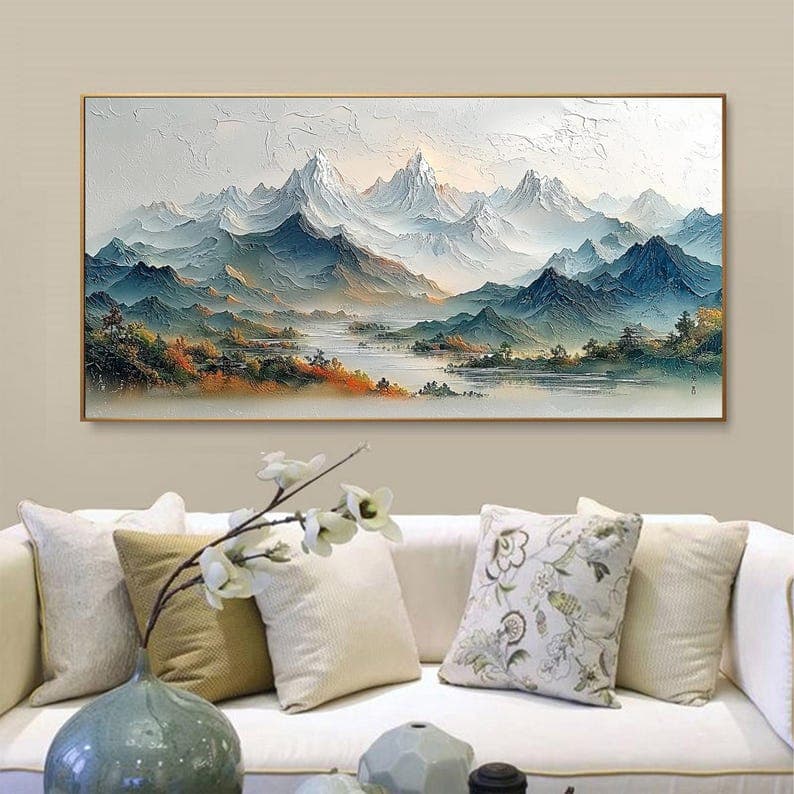
At-a-glance comparison
| Type | Physical surface | Repeatability | Light response | Best suited to |
|---|---|---|---|---|
| Canvas print | Mostly flat; image applied by printing | High | Color changes, but printed texture casts no new shadow | Accessible, consistent imagery |
| Hand-embellished print | Printed base with selected applied strokes | Medium to high | Limited relief in embellished areas | Buyers wanting modest surface variation |
| Fully textured painting | Raised material or paint across the composition | Natural handmade variation | Relief changes visibly with directional light | Rooms where tactile depth matters |
| Original oil painting | Oil paint applied to a prepared support | Depends on whether composition is unique or repeated | Brushwork, glazing and impasto respond to light | Buyers prioritizing the painted object and authorship |
The difference is physical, not just visual
Product photographs can make a printed canvas, a hand-embellished print and a fully hand-painted textured canvas look remarkably similar. The meaningful difference becomes clear when light moves across the surface or when the piece is viewed from the side. A print reproduces an image. A painting is built with applied color. Textured wall art makes relief, tool marks or added material an important part of the design.
The terms overlap. An oil painting may have heavy impasto; a textured artwork may use acrylic, modeling medium or mixed media rather than oil. A canvas print may receive a few hand-applied highlights. None of these labels alone tells you exactly what you are buying.
The best first question is therefore not 'Is this art textured?' but 'How was the image and surface made?' Ask whether the base image is printed, whether the complete surface is painted by hand, which materials create the relief, and how much variation to expect between the listing image and the delivered piece.
What textured wall art means
Textured wall art has a surface you can read through shadows as well as color. Artists may use palette knives, brushes, combs or other tools to build ridges, grooves and layered edges. Some compositions use restrained relief that becomes visible only in side light; others use heavy texture as the main subject.
Texture matters because it gives a neutral palette more visual information. Ivory, sand and taupe can remain quiet from across the room while revealing hand movement at close range. In a colorful painting, raised marks can separate color fields and make them respond differently throughout the day.
Material depth also affects handling. Raised areas should not be pressed directly by packaging, rubbed during cleaning or positioned where people regularly brush against the surface. A responsible listing should identify the medium, support, approximate depth and shipping format rather than relying on the phrase '3D art.'
Fully hand-painted, embellished or printed?
Fully hand-painted work is created with paint or medium across the canvas. A hand-embellished print begins with a reproduced image and adds selected strokes or texture. A canvas print transfers a digital image to canvas. Each can serve a purpose, but the description and price should allow the buyer to distinguish them.
Why handmade variation matters
If a work is made to order by hand, small differences in mark, edge and color mixing are normal. Variation is evidence of process, but it should remain within the agreed composition and palette. Buyers who need near-identical multiples should discuss tolerances and approval standards before ordering.
How canvas prints compare
Canvas prints are accessible, lightweight and repeatable. They suit projects that need the same image in multiple rooms or buyers who prioritize budget and predictable reproduction. A good print can present color and composition clearly, especially when viewed from normal room distance.
What a print does not provide is actual painted relief. Printed shadows may imitate brushwork in a front-facing photograph, but they do not cast new shadows as daylight changes. Look at close-up and side-angle images. If every apparent ridge remains visually flat, the effect is part of the printed image.
Print quality still varies. Resolution, ink, canvas weight, stretching and edge treatment influence the result. Ask whether the product arrives rolled, stretched or framed, and whether the listed size includes the frame. A print is not automatically inferior; it is a different object with different strengths.
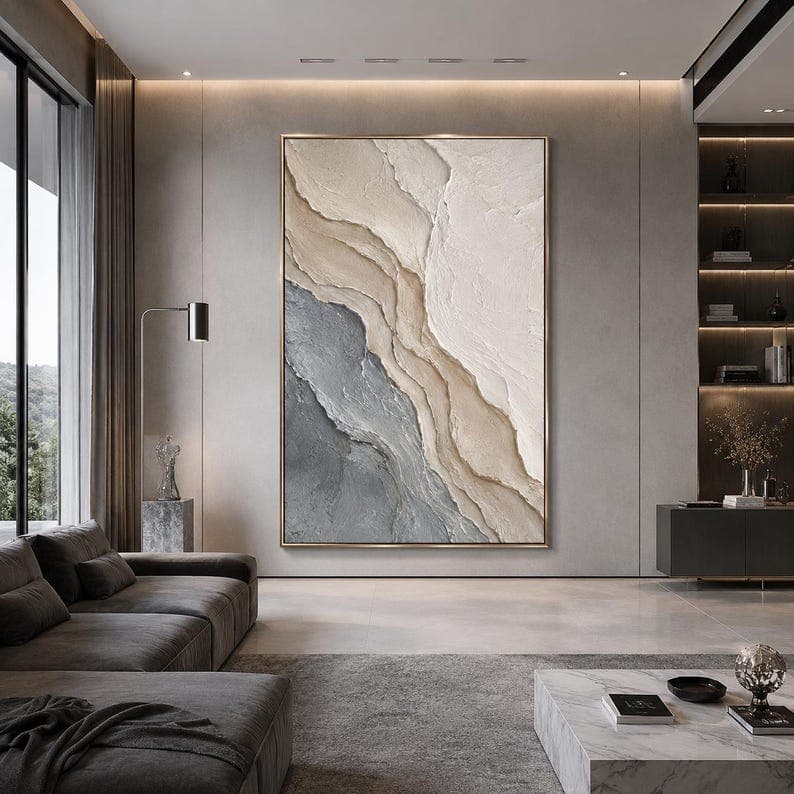
Choose by what you want to notice
Prioritize scale, composition and color contrast.
Prioritize real surface relief and side-light response.
Prioritize material transparency, brushwork and edge finishing.
How original oil paintings compare
An original oil painting is created with oil-based paint on canvas, panel or another prepared support. Oils allow gradual blending, translucent layers and substantial impasto. Visible brushwork can carry the artist's decisions, from thin underpainting to final highlights.
Oil is a medium, not a guarantee of quality or uniqueness. Some studios repeat a composition by hand, while a one-of-one work is designed and executed as a single original. If exclusivity matters, ask whether the composition will be reproduced and whether documentation accompanies the piece.
Oil paintings also need appropriate drying, handling and care. Thick passages can take longer to become stable than the surface appearance suggests. Buyers should avoid pressing packaging against raised paint and should follow material-specific guidance rather than applying household cleaner.
Choose according to the room
In a softly colored living room, textured wall art can supply depth without adding a busy pattern. Side daylight from a window or controlled accent lighting makes relief legible. In a dark corridor with flat overhead light, subtle texture may disappear; stronger contrast or a more directional light source may be needed.
For a bedroom, quieter relief and lower contrast often support a restful setting, while a dining room or entryway can carry a denser composition. In commercial interiors, consider cleaning, traffic, repeated quantities, fire and installation requirements established by the project team. Decorative suitability does not replace site compliance.
A canvas print is practical where repeatability and cost control matter. A hand-painted textured piece is compelling where material presence and changing light are central. An original oil painting is appropriate when the individual painted object and the artist's process are priorities.
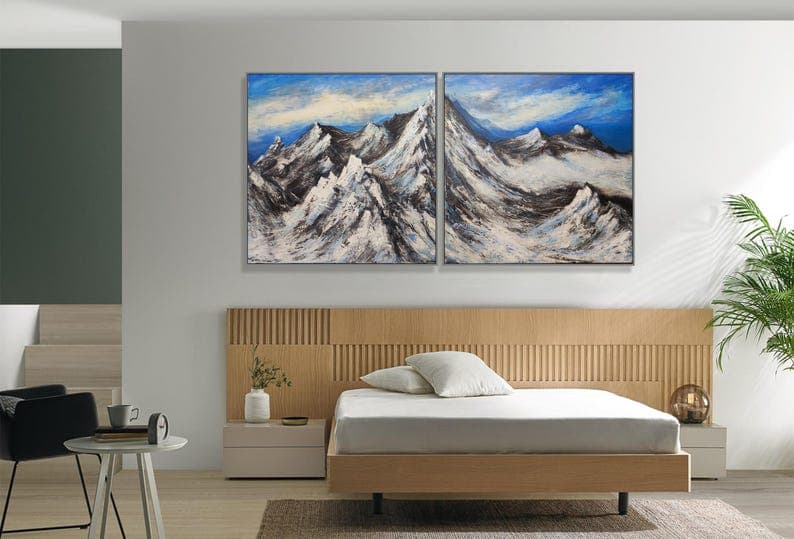
Evaluate an online listing carefully
Look for a straight-on image, a side view, a close surface detail and an unedited room view with believable scale. Video can help reveal how highlights and shadows move. Be cautious when every photograph is a digital mockup or when the same texture appears perfectly identical across several sizes.
Confirm the medium, support, creation method, size, depth, frame, hanging hardware and shipping format. For made-to-order work, ask what can vary, whether color customization is available and what form of approval is provided. Progress photos can be useful, but they should be matched to written dimensions and specifications.
Clarify returns before ordering. Custom sizes and colors may have different cancellation or return conditions from ready-made pieces. Keep the product description, agreed customization and approval messages together so expectations remain traceable.
Lighting, framing and care
Directional lighting reveals texture by creating small shadows, but steep or poorly placed light can produce distracting glare or exaggerated shadow. Test the work in daylight and evening conditions. Keep art away from persistent moisture, direct heat and strong sunlight, which may affect materials over time.
A floating frame protects the canvas edge and creates a narrow visual gap without covering the front surface. Frameless presentation can feel quieter, but exposed edges are more vulnerable during handling. Deep texture may require extra clearance within any frame design.
For routine care, avoid wet cloths, sprays and abrasive dusters unless the maker provides specific instructions. Use gentle, non-contact dust management and consult a qualified conservator for damage or valuable original work. Never flatten, scrape or repaint a raised area as a casual repair.
A buyer's decision framework
Choose a canvas print when you want accessible, repeatable imagery and minimal surface relief. Choose textured wall art when tactile depth and interaction with light are essential. Choose an original oil painting when individual brushwork, the physical painted object and authorship carry the greatest value.
Then verify what the product actually is. Material transparency matters more than category language. At IWISHART, handmade and custom options should be confirmed through the individual product description and written order specification, including size, palette, frame and approval expectations.
Good wall art does not need the most elaborate production method. It needs an honest description, appropriate construction and a clear relationship to the room. Understanding the surface allows you to pay for the qualities you will actually see and value.
Frequently asked questions
Is textured wall art always hand painted?
No. Textured wall art may be fully hand painted, printed and hand embellished, or made with mixed media over a base image. Ask whether the base is printed, which parts are applied by hand and whether the product photographs show the actual piece or a representative sample.
How can I tell a canvas print from a painting online?
Look for close side-angle photographs showing real raised edges and changing shadows. Read the medium and production description carefully. Printed brush marks remain flat even when the image depicts texture. If the listing is unclear, request an unedited detail video and written confirmation.
Does textured wall art collect dust?
Deep relief can hold more dust than a smooth print. Place it away from greasy cooking areas and frequent contact. Avoid wet cleaning unless the maker recommends it. Gentle non-contact dust removal is safer, while damaged or valuable work should be assessed by a qualified conservator.
Can textured artwork be framed?
Yes. Floating frames are common because they leave a narrow gap around the canvas and do not cover the painted face. The frame must accommodate the canvas depth and any projecting texture. Confirm the complete outside dimensions, frame material and hanging weight before ordering.
Does textured art look good in a neutral room?
Texture is especially useful in neutral interiors because relief adds depth without requiring strong color. Ivory, beige, clay and taupe surfaces can change subtly with daylight. Test the lighting direction, artwork scale and contrast against the wall so the piece remains visible rather than blending away.
Is an original oil painting better than a canvas print?
It depends on the buyer's priorities. An original oil painting offers a physically painted surface and individual brushwork. A canvas print offers consistent reproduction and a lower entry price. Neither label guarantees construction quality, so compare materials, finishing, framing and seller transparency.
Continue planning
Textured Art Collection → Connects the material comparison to relevant hand-painted textured pieces.
About IWISHART → Provides context on the brand's approach to handmade work and specifications.